

Domen Šuman, Tinka Avramova, Jasmine Molinari, Adam Dragun:
AESTHETIC OF DIRT, CLEANLINESS AND CLEANING IN VISUAL THEATRE
INTRODUCTION
In the past year, we conducted practical artistic research that we named Aesthetics of Dirt, Cleanliness, and Cleaning in Visual Theatre. Our research method was based on a series of workshops conducted from April to October with a smaller group of participants. Another part of the research involved creating the theatre production Garden of Labour, where we applied the knowledge gained from the workshops in a specific visual storyboard.
We explored the possibilities of dirt, cleanliness, and cleaning in visual theatre. Our primary focus was on the work with dirt, as it contrasts with what is considered „normal“ cleanliness. In total, we conducted seven workshops with four main focuses. The first focus was on dirt itself, analyzing the rules and dramaturgies surrounding it. The second focus was on the human body in the act of cleaning. The third focus involved visual storyboards and the complex universes of cleaning. The last focus was theoretical; however, this fourth focus is not included in this study.
The research methodology relied on practical experiences gained through the workshops. We invited our collaborators from the Garden of Labour performance to participate as a form of preparation for the project. We held seven meetings: five between April and the end of June, and two more in September. During these meetings, we carried out practical tasks, reflected on them, and attempted to identify and articulate new insights about the topic.
The research theme was the aesthetics of dirt, cleanliness, and cleaning in visual theatre. While we will delve into the first part later, we must first establish a framework for understanding visual theatre. Visual theatre emphasizes the visual elements as its primary focus. Visual tools such as spatial relationships, colors, compositions, light, costumes, scenography, and props serve as the main communication channels, rather than text or acting.
1. WHAT IS DIRT?
For the context of our research, it is important first to define dirt and cleanliness and how we perceived them. A clear dichotomy appears in the words dirt and cleanliness and dirty and clean. For us, it was important to distinguish the differences between these terms. We will delve into a deeper understanding of the systems that appear around dirt slowly through this chapter.
The definition of dirt is, at first glance, simple but complex because it always works in relation to the master object and an additive[1]. “The master object is treated as valuable or interesting in its own right while the additive is reduced to its role as a disturbing element[2].“ Thus, the basic idea of something being dirty implies that the ideal state of something—space, object, or material—is interrupted. “There is an implicit reference to an ideal, unblemished, normal state and to a deviation from that state. The implication is that dirty objects require cleaning[3].”
In our first workshop, we defined dirt and cleanliness through three categories:
- Cultural Relativity: Dirt is culturally contingent, with each culture assigning different values and meanings to what is considered “dirty.” What one culture may view as unclean could, in another context, be seen as neutral or even desirable.
- Cleanliness as Ideal: For many, cleanliness is an ideal state that aligns with one’s expectations of order. If an environment meets these expectations, it is perceived as clean, regardless of the physical presence of dirt. This is a very subjective position.
- Dirt as Concept: Rather than a concrete entity, dirt emerged as an idea—an organizational category that distinguishes what is acceptable from what is out of place.
Our need to have a clean environment exists in the duality that, on one hand, serves as an act of preserving one’s surroundings and, on the other, as a form of destruction. Cleaning can simultaneously be seen as taking responsibility for one’s surroundings but, at the same time, as a force that disrupts and obliterates aspects of the environment that naturally appear.
Furthermore, we encounter limitations in the term dirt itself, as different contexts may demand more precise language to reflect varying degrees of hazard or degradation. When dirt reaches a threshold of danger or degradation, society often imposes stricter definitions, such as contamination or pollution, which imply heightened severity and urgency.
Dirt can also be perceived as very physical. One of the workshop participants, Michaela Čajkovičeva, connects dirt with her body. For her, dirt is an emotional, physical experience; it impacts her sense of bodily comfort, leaving traces on her skin and influencing her physical well-being. Her aversion to dirt manifests in discomfort with specific sensory experiences, such as greasy hair, which, for her, represents a loss of control over cleanliness.
Another aspect mentioned in the discussion was how our ability to recognize dirt is part of the socialization process. When we are little, we are dirty all the time, but over time, it becomes less and less socially acceptable. We learn about cleanliness as a value through social interactions with parents and the socialization process. If we look at the animal world, we can also see traces of a value system where birds and monkeys, for example, take care of their environment. However, human beings have taken it further as an idea because we understand the dangers our carelessness can bring into our lives.
There is a certain amount of autonomy in dirt. It has independent growth and behavior since dirt is nothing more than natural processes. Mold grows, dust piles up, and wet stains dry. Dirt does not rely on humans; even more, we could say that dirt resists people. Despite efforts to clean, dirt continually reappears and transforms. This persistence demonstrates how dirt has a certain power to resist human attempts to fully control it. In this way, dirt acts autonomously, defying efforts to contain or eliminate it completely.
On the opposite side of dirt is the cleaning process, where human inventions—cleaning supplies—fight dirt. They represent a transformation to some purity and fake newness. Cleaning supplies have specific smells—lemon, ocean, forest—that give us a feeling of how fresh the cleaned object or space is. Many cleaning products are both restorative and destructive. For instance, bleach cleans surfaces but can ruin clothes, and some products kill bacteria but may irritate human skin or lungs. They occupy a dual role, capable of care and harm, which gives them a strange ambivalence—they are items we rely on but also need to handle carefully.
1.1. Exploring Dirt
Exploration of dirt was the focus of the first workshop. We were slowly shifting from site-specific work into composed work in artificial situations and spaces. The exercises gave us dramaturgical tools and opened some questions about how to present dirt on the stage.
The first exercise was to find a space or surface that is dirty and try to find a narrative for it. Become a detective of the dirt. Try to name the dirt, how it came into the space, and what the timeframe of the dirt is. What is the relationship between the space and the people being in it?
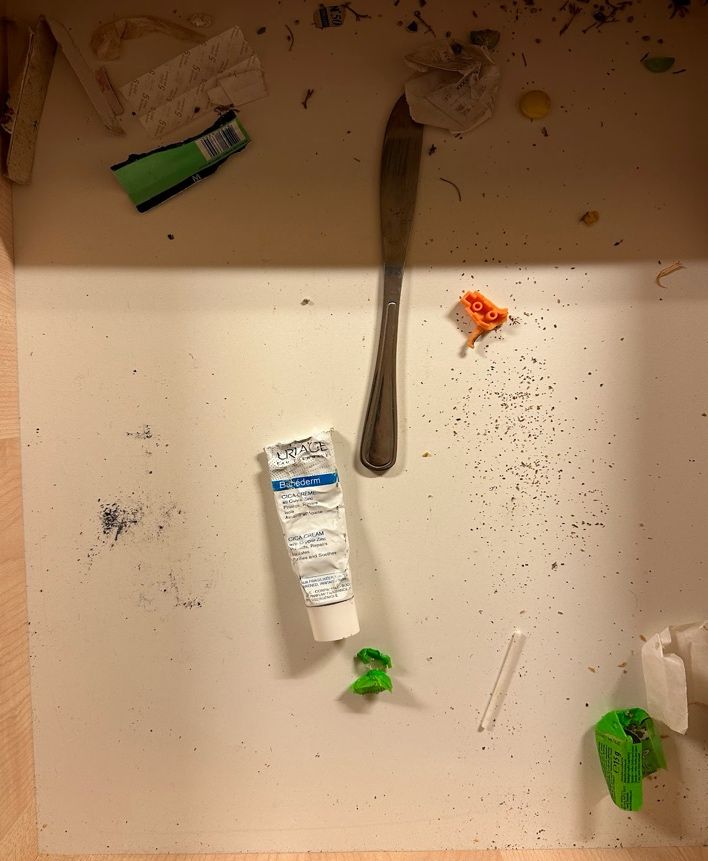
The result of this task was a tour around DAMU, stopping at different places. First, we stopped in the actors’ wardrobe of Theatre DISK. It is a closed space where actors gather before and after theatre shows. We were shown the drawers in the male wardrobe. These are hidden places that reveal the true life in that space. It is a space inhabited by different groups of people, and there are often parties. The drawers contained various leftovers—from breadcrumbs and tobacco to weed and unknown materials that we could only imagine the origins of. Tinka Avramova said she wanted to find the epicenter of dirt at DAMU.
The next stop was a disinfectant dispenser in a hallway of DAMU that had rotted since it had probably not been replaced since the COVID pandemic. There was an interesting shift when Zbyněk Rohlík looked at the disinfectant as a person. He talked about it as a living being that was left behind to rot. He described the dust on it as hair and its spraying function as akin to sneezing. The time of dirt in this example became relevant. Since we did not know how long the disinfectant had been there, we were left to guess. His chosen object provoked us, mostly through its smell.
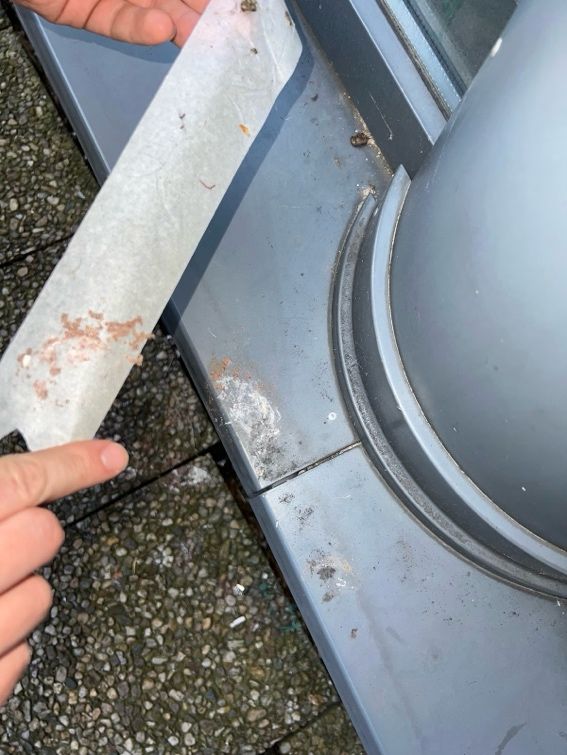
Ema Lovecká took us outside to the small rooftop terrace. She showed us the air conditioning but referred to it as ventilation, naming its role as important for purifying the air. However, her main point was different. Recently, the air conditioning unit had been replaced, but the old spot where it had been installed was left unfixed, leaving it open to outside elements. As a result, the building could begin rotting from the inside. In Ema’s narration, time again became super important, as she took into account the significance of human input—from the construction of the building to its later alterations. She made an interesting invitation to step behind the fence and enter a small space around the new air conditioning unit, and we all got dirty. A new meaning appeared: to see the dirt, you need to get dirty.
Lastly, we examined a chair, which took considerable time. Stains, holes, and missing parts characterized the chair. Although still functional, the idea of sitting on it felt uncomfortable. There is an interesting emotional response to cleanliness—when we see dirt, we tend to avoid it. Yet, in public transport, we often sit on dirty seats without hesitation.
From the task, we developed a few new ideas around dirt:
- Dirt can be considered speculative because it invites interpretation, storytelling, and theories about its origins, transformations, and meanings. Unlike clearly defined objects or elements, dirt embodies ambiguity and mystery, prompting us to speculate about where it came from, what it represents, and how it relates to human activity, nature, or decay.
- Different types of dirt:
- Human dirt: Waste generated by human activity.
- Environmental dirt: Natural residues (e.g., dust, plant debris), generally accepted as part of natural processes, representing the indifferent passage of time.
- Result of dirt: Destroyed objects—objects that lose their aesthetic function and functionality over time because of being dirty.
- Dirt can give a place its meaning. If we clean that space, the meaning of the space would change.
- Time of dirt:
- Sudden: When something spills or gets destroyed, the time is short.
- Long-term build-up: Over a longer period, dirt slowly accumulates.
- Archaeological aspect of dirt: When we look at dirt and think about it, we can conduct research into what it is made of. Observing dirt was seen as an act of uncovering hidden histories, much like archaeology.
- Dirt as ready-made: When connected with a narrative, dirt can gain a lot of new meaning, such as personalization and metaphor. We can even develop empathy towards dirt, even though we perceive it as a kind of impurity.
- Dirt is an important symbol of life. When we are in a new space, we often say it needs some time to gain its soul, and dirt is an important part of this process. For example, a sterile surgery room gains life through the act of performing surgery and dirtying the space.
- Dirt is metaphorical: We can extend its general meaning to other things, such as “dirty dancing” or “dirty sound.”
- Dirt works on a scale: There is micro dirt, which is invisible to the human eye, and macro dirt, which is visible and appears in different sizes.
- Dirt is a composition: It is often composed of different materials and appears in specific shapes in relation to the master object.
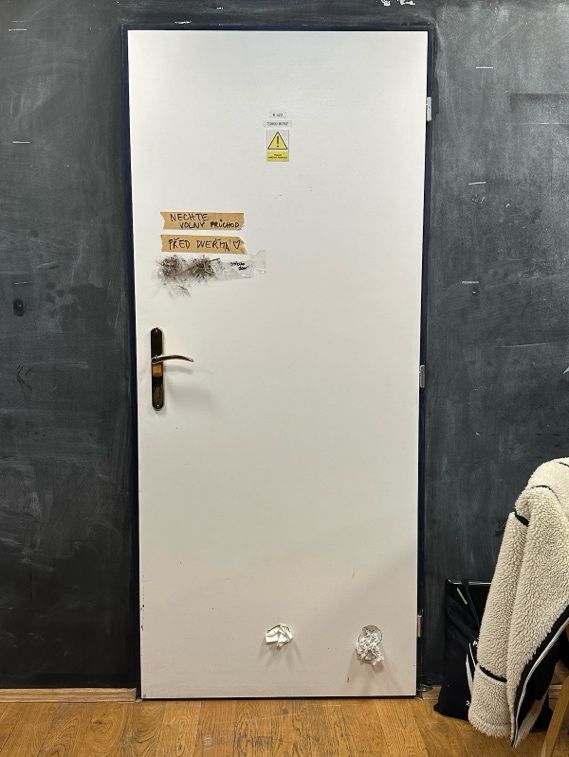
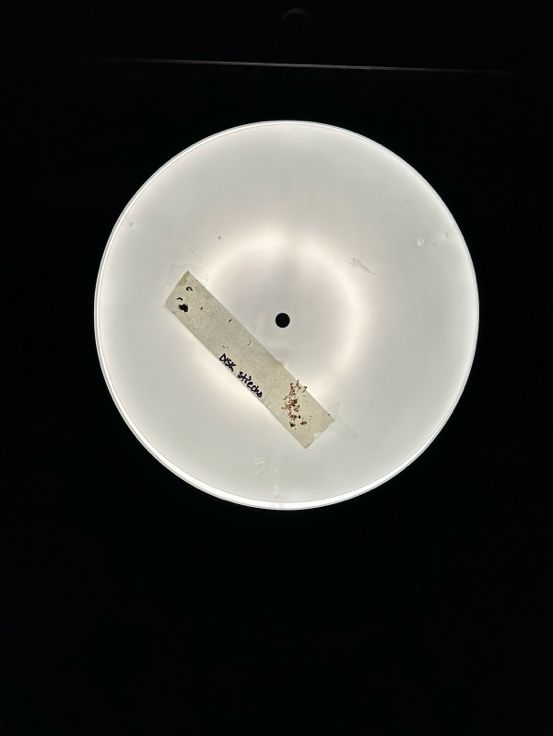
- Another exercise we did was based on this concept. We collected dirt samples around DAMU and created installations from these samples. We placed the materials into a new context as art pieces in a gallery. Each participant became a curator, presenting an exhibition and naming it.
What happened is that the dirt lost its role and became just the material itself. A spider web was a spider web, hair was hair, and so on. Without its original context, dirt lost its meaning. However, an important understanding of dirt became clearer: dirt only works in a certain context—when it signifies the impurity of the master object.
Dirt samples themselves offered a different story than the compositions from the first task. Domen Šuman created an exhibition titled Bird Nest is Not Disgusting. In his curation, it became clear that samples we perceive as dirty can be viewed in a completely different light—as useful for other creatures. Since dirt often operates on a small scale, it can be helpful for birds, mice, insects, and ants. Similarly, Tinka Avramova, in her piece The Most Essential Is Invisible, emphasized how something we perceive as dirt is vital for the ecosystem we live in.
Both examples became critiques of a human-centered worldview. For our ideals, we often destroy other species and natural life to align with our beliefs. The reality is that in nature, we cannot find dirt as such—it only exists within the context of human living.
1.2. How to Present Dirt in Theatre?
In the second workshop, we focused on working with dirt in a staged environment. For us, it was important to experiment with the idea of staging dirt in an artificial situation and to see what is needed for materials to become dirt. From the first workshop, we realized that when we take dirt out of its context, it just becomes material as such.
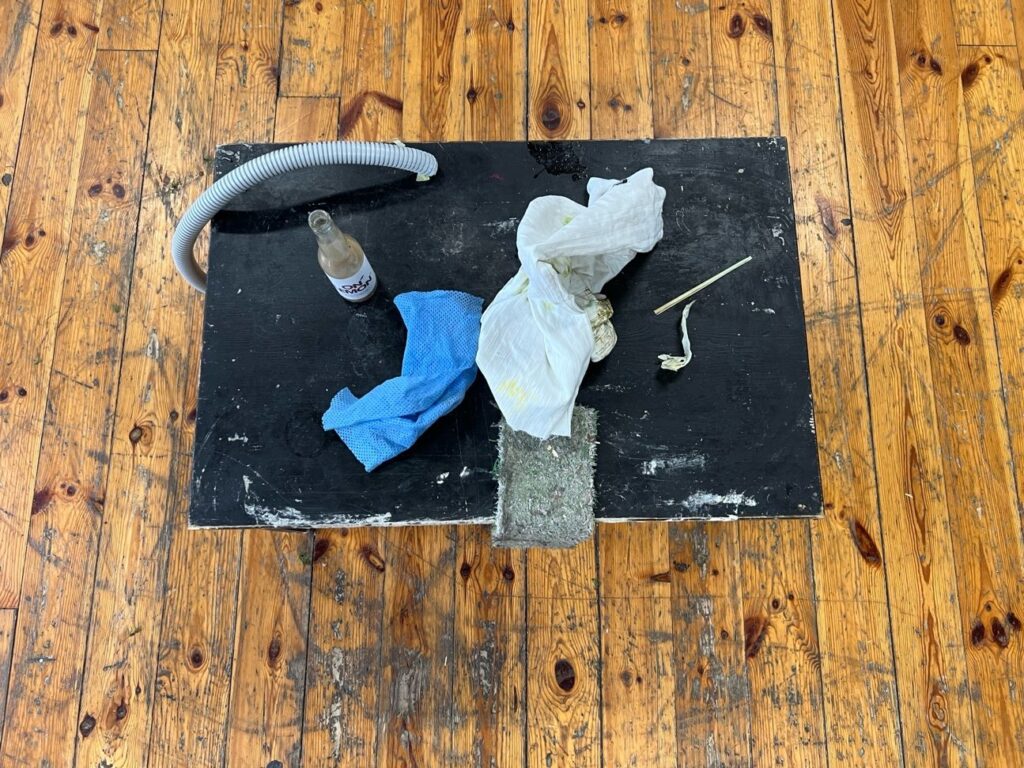
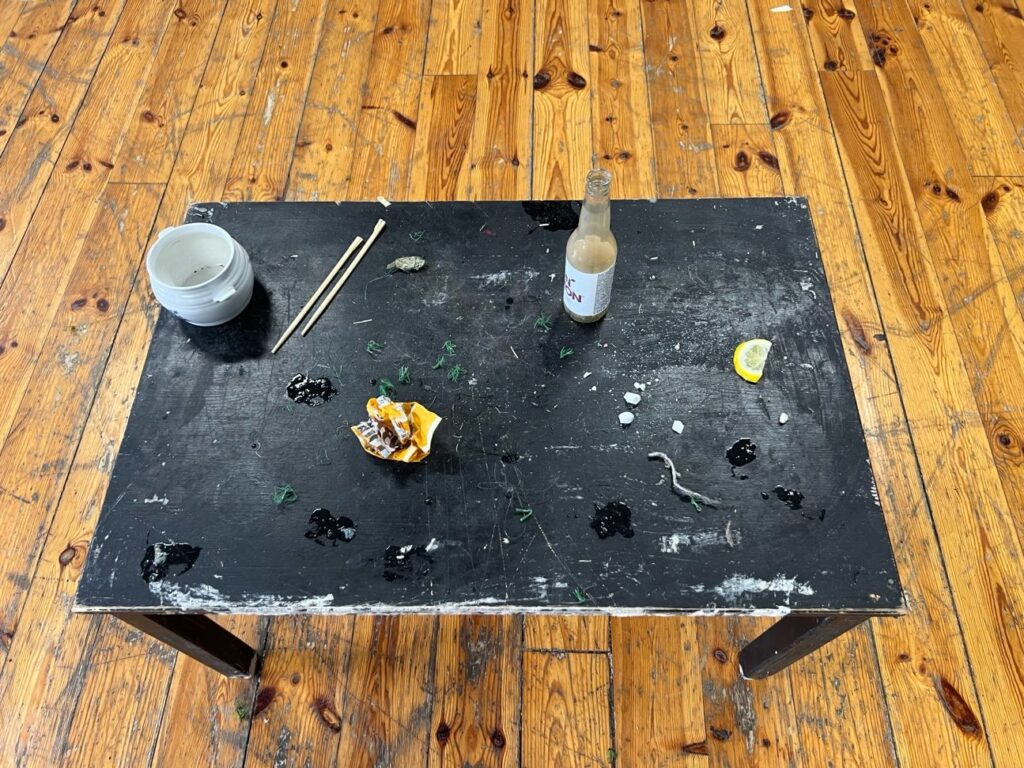
We composed an installation where the goal was to build a microenvironment that would present itself as dirty. We used a table as a stage. Later, we realized that the table itself brought important meaning to our installation. Again, we worked with collected samples. In this composition, we tried three different approaches: the first was to tell a story about this place, the second was cleaning the composition, and the last was to build a dirty environment and then clean it.
It became clear that dirt works in a certain context. When storytelling about what is dirt, it was always more about the situation around the dirt rather than the dirt itself. However, there was a shift in perception at the moment when we started manipulating the environments we created. When we began cleaning it, the action gained a clear intention. Also, the materials on the table were easier to judge—whether they were dirt, trash, or not. Through the way we treat the material, the meaning emerges.
In our context, a few things emerged. The most interesting piece of the composition turned out to be a trash bin. This highlighted how, in the context of theatre, value systems can be very playful. While dirt often represents something disgusting or aesthetically unpleasant, in the theatre context, dirt can be beautiful. The message about the value of dirt comes from people’s actions and the value applied to the material, rather than the dirt itself.
In theatre, chaos and dirtying up are regular practices. It somehow feels that if there is no chaos, there was no progress throughout the production. But this chaos mostly appears in theatre as a metaphor of some kind—inner feelings, subjective perceptions of a situation, or emotions. Since the dirt-clean relationship works as a visual metaphor, it creates concrete and actionable situations where we follow visual change. The dynamic that works with dirtying up the space is primarily visual. However, the concept of “dirty” can be applied to more than the visual—like acting, speaking, or singing. The feeling of dirtiness can be a creative tool applied to other parts of theatre beyond just visuals.
In theatre, time is important, and there is the possibility to bend time significantly. This is something to be aware of when considering how to create cleaning and dirtying up in theatre. For example, you can depict a big party scene in a theatre without actually having a party—you can simply show the result, and it is clear what happened. Or you can throw ash around very slowly, and the visibility and texture of the action change.
Since time is important, there is a challenge: dirt often grows slowly over years, such as mold or the destruction of walls after a catastrophe. Most productions work within the frame of one to a few hours, so it is necessary to approach the time of dirt differently. There is also the possibility to change the material value of an object—for instance, using something like glitter instead of liquid to represent the same thing.
Dirt is part of our life. We do not want to create chaos—dirt appears on its own. I eat because I need to eat, and the plate becomes dirty. In the context of theatre, dirt can become a goal or an intention. We intentionally include actions and scenes that explore the dynamics of dirt and cleanliness.
2. THE ACT OF CLEANING – PHYSICALITY OF CLEANING
In our third workshop we explored the physicality and performative aspects of the act of cleaning. The workshop specifically focused on understanding the physical potential and limitations of cleaning tasks, examining how these actions affect the body of the cleaner. Its aim was to serve as a form of physical training for the actors and other team members, providing insight into cleaning movements through an embodied approach. By isolating the mechanics of cleaning, we sought to reveal the unique choreography inherent in this everyday activity and to discover how these physical movements might translate into a performative context. Additionally, the exercises served as preparatory work for upcoming rehearsals in which the actors engaged with actual materials and dirt, setting a foundation for potential situations which could be set on stage.
2.1. Position, Motion, and Quality: The Building Blocks of the Act of Cleaning
We began the workshop by brainstorming the various body positions involved in cleaning—whether through personal experience or observations of others. This brainstorming produced a diverse list of full-body positions and hand postures, which we categorised and used as the basis for our physical exploration. Full-body positions included a range of stances, from “all fours” to “standing” to “lying on one’s side,” each position prompting different levels of comfort and strain on the body. Similarly, hand positions—such as “clutching,” “cupping,” and “pinching”—involved distinct grips and levels of tension, reflecting the physical demands of various cleaning tasks.
Below is a comprehensive list of what we came up with. The list is in no particular curated or structured order, but rather reflects the order in which the collective brainstorming happened.
Positions – Whole Body
- All Fours
- Kneeling
- Seated
- Flat
- On toes
- High
- Mermaid
- Seated
- Reaching
- Squatting
- Deep
- High
- Bending
- Hunching
- Stretching
- Leaning
- With support
- Without support
- Forwards
- Backwards
- Stepping up/on
- Lying
- Stomach
- Back
- Side
- Child Pose
- Sitting
- Crisscrossed
- Standing
- Twisting
- Walking
- Running
Positions – Hands
- On Palm
- Fingers spread
- Fingers apart
- Clutching
- Fist
- Pinching
- Cupping
- Fingering
To deepen our understanding of these positions and also think through a more bodily approach, as a group the participants and leaders were asked to go through the list, one by one and take the position in the space. The aim was to hold these specific positions and to observe the physical experience and challenges each one presented. For instance, while some found it comfortable to hold a low squat, others experienced discomfort almost immediately. It became clear that each body type has unique advantages and disadvantages for particular cleaning positions; for example, taller participants could reach high surfaces easily but found crouching more strenuous. These differences highlighted the physical adaptability required for repetitive cleaning tasks, as each participant adjusted their body posture to minimise discomfort and strain.
One significant discovery from this task was the effect of prolonged cleaning positions on the body. We investigated each participant’s physical breaking point by asking them to hold specific positions until they experienced discomfort. This exercise illuminated the varying physical challenges each position presents. For example, the awkward posture required to clean a bathtub often results in strain on the lower back, as one must lean over the edge to reach the corners while maintaining sufficient pressure. Tasks such as this reveal that many cleaning positions place the body in contorted postures that are not typically assumed in daily life, leading to physical fatigue and discomfort over time.
This segment of the workshop raised questions about whether cleaning positions are ever adapted to suit the body, or if the body must constantly adjust to the demands of the task. The exercises allowed us to appreciate the physical endurance required for professional cleaning, as the body must often adapt to awkward angles and positions to complete a task effectively.
Following the exploration of positions, we conducted yet another round of brainstorming, this time in which we focused on the different and specific types of cleaning actions that exist. Our brainstorm yielding the following list:
Actions
- Scrubbing
- Dry
- Wet
- Picking up
- Putting down
- Sweeping
- Mopping
- Collecting
- Wiping
- Throwing
- Wringing out
- Polishing
- Slapping
- Dusting
- Waiting
- Spraying
- Folding
- Squeezing
- Airing
- Rinsing
- Plugging/Unplugging
- Carrying
- Moving
- Putting in/out
- Pulling
- Pushing
- Changing the bed
- Pouring
- Scratching
- Climbing
- Tying
- Turning
- Compressing
- Ironing
- Sorting
- Checking
- Smelling
- Opening
- Closing
- Defrosting
- Washing hands
- Hiding
- Loading
- Curtains
While brainstorming about the specific actions we encounter in cleaning, this also made us think about the different motions and qualities related to the act of cleaning. Cleaning is not a static event, it requires the whole body to be engaged and in motion, regardless of how big or small such movements are. Each position is then brought into life as a result of the motion required to clean dirt. This movement or motion is then further enhanced based on the quality of the movement itself or the effort needed to clean. Therefore we brainstormed two more lists based on motions and qualities of the act of cleaning that we have encountered or experienced.
Motions
- Circular
- Back and forth
- Up and down
- Right and left
- Figure 8
- Chaotic
- Flat
- Vertical
Qualities
- Rushing
- Emotions
- Repeating
- Precision
- Focusing
- Exhaustion
- Force
- Light touch
- Meditative
- Loud
- Fast
- Slow
- Sport
Once we established the building blocks of the act of cleaning, we were ready to explore the physicality and potential of these elements in our own bodies and in more performative ways. We conducted exercises focused on group etudes, where participants combined a position, an action, a motion, and a quality of movement to simulate a “cleaning choreography.” This exercise was akin to a game of “cleaning twister,” where the combination of movement elements was chosen at random. For example:
- Leaning backwards, airing, up and down, exhausted
- Lying on back, polishing, flat, lightly
- Whole body, rinsing, back and forth, in sport mode
The results were offered a new perspective to the physicality of cleaning actions and situations. While coming from cleaning, the results were more abstracted and instead became pure movement, rarely or very subtly resembling any normal act of cleaning.
For example, some combinations felt incompatible, creating a humorous or absurd effect, while others allowed for a seamless integration that mirrored the natural flow of cleaning. By reducing cleaning to its essential physical components—positions, motions, and qualities—we began to see the act of cleaning as a series of choreographed movements.
2.2. The Impact of Efficiency and Functionality on Cleaning Movements
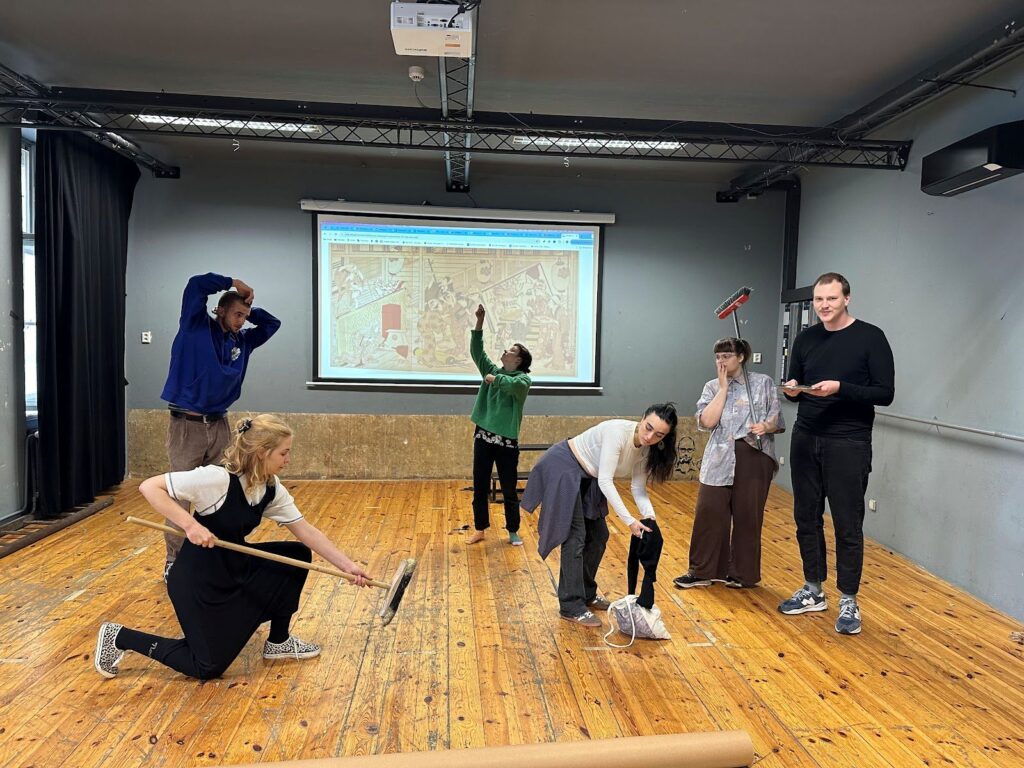
To further investigate the concept of cleaning as performance, we introduced duet and trio exercises, in which participants performed the same action but in different positions or with varied movement qualities. For example in one trio, 3 participants went into the space and simply tried walking in a bent position. By assuming a cleaning position and simply walking, the physicality and potentially of walking was transformed. And again there was an appreciation of the physical toll that bending has on the body as after 2 min of walking in a bent position the participants stood up and there was a huge sense of relief. Then two of the participants walked around the space normally only bending over to actually pick up something while the third participant stayed bent the whole time and not picking anything up, creating a humorous and yet telling situation on stage.
Or in another example, one participant worked with the action of sweeping with a broom. He started by lying down on the floor with the broom in his hands and sweeping. The unconventional approach to sweeping was absurd and ineffective however it did not really resemble sweeping and therefore there was no need to justify or read it as sweeping. HOwever when another participant entered the space also with a broom and started sweeping normally standing up in relation to the participant on the floor, sweeping became the main topic and it was clear that there was a “right way and wrong” or effective and ineffective way to sweep. This also brought up the question of the relationship between the cleaner and their tools. The duet underscored that cleaning tools do not automatically make the process easier; rather, their utility is maximised through experience and technique. Professional cleaners develop an intuitive understanding of their tools, allowing them to apply subtle variations in pressure and movement to achieve efficient results.
These group exercises underscored the notion that the ultimate goal of cleaning is efficiency. When individuals executed the same action in unusual positions, the differences highlighted the awkwardness that emerges when efficiency is sacrificed for style or form. Watching participants perform familiar cleaning tasks in unconventional ways invited the audience to consider the pragmatics of cleaning: it became evident that cleaning techniques have evolved primarily to maximise ease and efficiency.
2.3. Creating Compositions and Staging Cleaning
As a final exercise, we examined the visual and compositional potential of cleaning. We looked at depictions of cleaning in classical art, specifically representations of the working class engaged in various cleaning tasks. One in particular, House Cleaning in Preparation of the New Year by Kitagawa Utamaro. Inspired by these images, we created static compositions of cleaning poses and then introduced physical movement into these compositions. Without the tools in hand, the participants’ bodies created abstract forms, allowing for multiple interpretations of the “cleaning” actions being performed. This exploration demonstrated that the visual representation of cleaning can evoke broader themes and interpretations beyond its functional purpose.
2.4. Reenacting the Act of Cleaning vs the Real Act of Cleaning
It is important to note that during the workshop, we focused on the physicality of the act of cleaning, however there were hardly any real cleaning actions taking place. Meaning that the participants were not engaging with dirt or cleaning tools (with some exceptions). However in retrospect, it did highlight an important quality and qualification of the types of exercises we did do and the need to consider the body’s instinctive adjustments when in dialogue with an actual cleaning task. For instance, without a physical mess to address, the movements can be seen as less precise, as there is no external feedback (i.e., visible dirt) to prompt adjustments. However, when performing real cleaning, movements adapt fluidly in response to the task, as one might increase pressure or alter the scrubbing direction based on the difficulty of the spot. This responsive quality is diminished in a purely performative setting, shifting the emphasis from functional cleaning to a stylized movement vocabulary, which is where most of our exploration stayed in this particular workshop.
2.5. Conclusion
This workshop illuminated the complex relationship between the body, movement, and functionality in cleaning. Through exercises that deconstructed cleaning into positions, actions, and movement qualities, participants developed a heightened awareness of the physical demands and choreography within cleaning. By removing the practical goal of dirt removal, the workshop enabled participants to explore cleaning as an expressive, performative act. The use of tools, positions, and qualities of movement all contribute to a unique “dance” of cleaning, where efficiency, adaptability, and physical endurance intersect.
Overall, the workshop underscored the importance of viewing cleaning as a structured physical activity, one that not only impacts the cleaner’s body but also has performative and aesthetic potential. These insights were informative in future rehearsals as we experimented with ways to stage cleaning as both a functional and expressive act. Through these embodied explorations, we were able to deepen our understanding of how an everyday activity like cleaning can be transformed into a performative act of cleaning.
3. GARDEN OF LABOUR
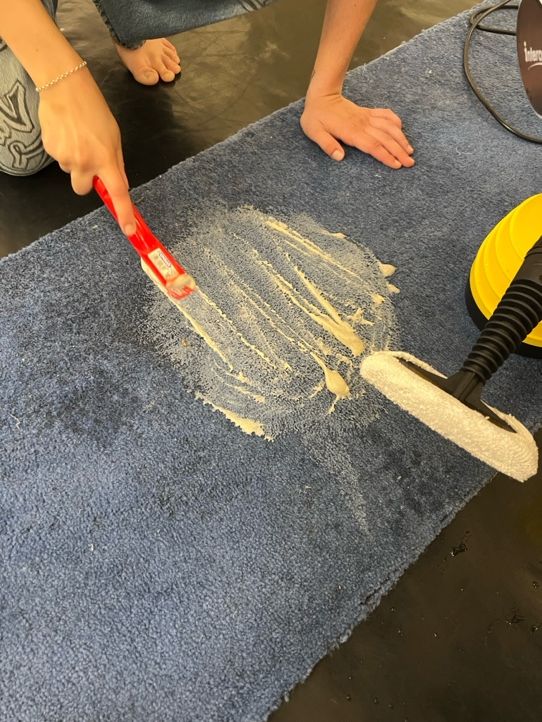
The theme of dirt and cleanliness is used as the main driving force of the performance Garden of Labour. It is a creative tool and is also present on a metaphorical level, where mops appear as creatures who find pure joy in dirt and cleaning, as it is their sole purpose in life. The workshops also helped us establish a shared vocabulary for working with dirt. In the show, there is a large ventilation system that serves as the main nemesis of the workers. Below is a list of how we worked with cleaning, dirt, and cleanliness as creative tools.
DIRT SAMPLES AND CLEANING PROCESS
- Mopping the floor: coffee
- First/second ventilation:
- Fake dust → foam rubber/water hemp
- Pigeon’s nest → fake feathers
- Styrofoam balls
- White paint → under the ladder
- Third ventilation:
- Fake dust → foam rubber/water hemp
- Pigeon’s nest → fake feathers
- Some confetti
- Fourth ventilation: FLO-PAK GREEN
- Statue pee: pink color
- Pink color spread with mop: by a mop creature
- Small pool: wiping cloths, pee, dust residue (collecting the dirt)
- Dirt out of scene: made with croissant
- Fifth ventilation: colorful heart-shaped confetti (sexy song)
- Sixth ventilation: couscous
- Dirt out of the pool: tissues, microfiber, ventilation dirt
- Dirt from Hamlet: costumes, masks, confetti, flowers, glasses
TOOLS TO CLEAN
- Vacuum cleaner
- Mops
- Wiping cloths
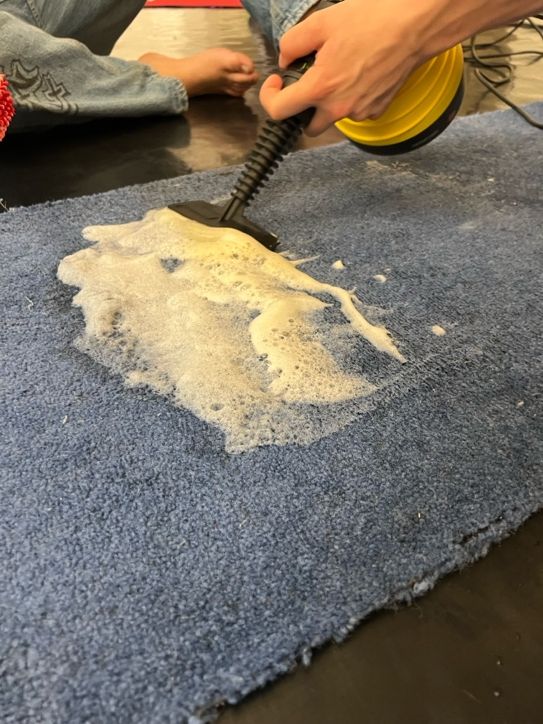
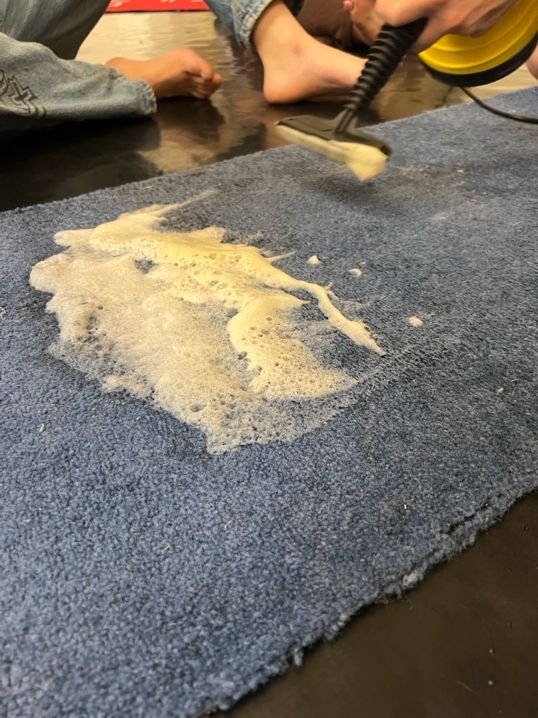
- Steam cleaner
- Brushes
- Soap foam
- Broom and dustpan
- Sponges
- Human being
- Plastic bags
- Pools
The production came to life through a fully prepared storyboard. In the final workshops, we explored the advantages and disadvantages of working with storyboards in theatre. We realized that the sequence of images offers concrete ideas while still providing a lot of freedom for the creators. The important thing about this type of theatre is constant testing. To bring a clear and specific vision of dirt and cleanliness to visual theatre, the main tool is experimentation—seeing how things work in practice. It is, quite literally, a theatre laboratory. For example, we tested 15 different materials to determine what the color under the ladder could be, and it is still not perfect.
We worked with the idea of the surprise of dirt—that dirt is an independent entity, shifting between human disdain and the love of the mops. Dramaturgically, we move between the meanings of dirt in the most direct way: as an impurity in a perfect world and as a metaphor for our need to work and produce, even when we are laboring for something bizarre. In the theatre, we build and take care of the set so the performance can happen, and then it gets messed up—only to be cleaned again.
CONCLUSION
In conclusion, we conducted an interesting study that provided us with valuable dramaturgical tools for future work. The entire study is a collection of useful tools and ideas that can be taken beyond the context of cleaning and dirt and applied to theatre in many ways.
If we were to name a few key points, they would be:
- The meaning of a material emerges through context. Context can be developed through storytelling or action, which reveals the attitude towards the material and allows it to gain meaning.
- Testing is the only way to create visual theatre, where the dynamic is built around the relationship between clean and dirty.
- A shared vocabulary shortens the process when working with actors. For example, a map of body positions proved very helpful during rehearsals.
- We can approach dirt with empathy.
- Sometimes it’s useful to shift our perspective; doing so can reveal how quickly our values are constructed.
- Composition and time are the two most important tools in visual theatre. These elements form the core of this type of theatre.
- There are many more possibilities for working with dirt.
- Working with dirt is an experience in itself.
- Someone, please, write about the dramaturgy of chaos.
Literature:
- LAGERSPETZ, Olli. A Philosophy of Dirt. London: Reaktion Books Ltd, 2018. ISBN 978 1 78023 918 7
Photos: Domen Šuman
[1] LAGERSPETZ, Olli. A Philosophy of Dirt. London: Reaktion Books Ltd, 2018, p. 48. ISBN 978 1 78023 918 7
[2] Index. p. 48
[3] Index p. 45